Care LibraryAroids
Comprehensive Anthurium Care & Propagation Guide With 3 Bonuses
July 30, 2026 · 23 min read
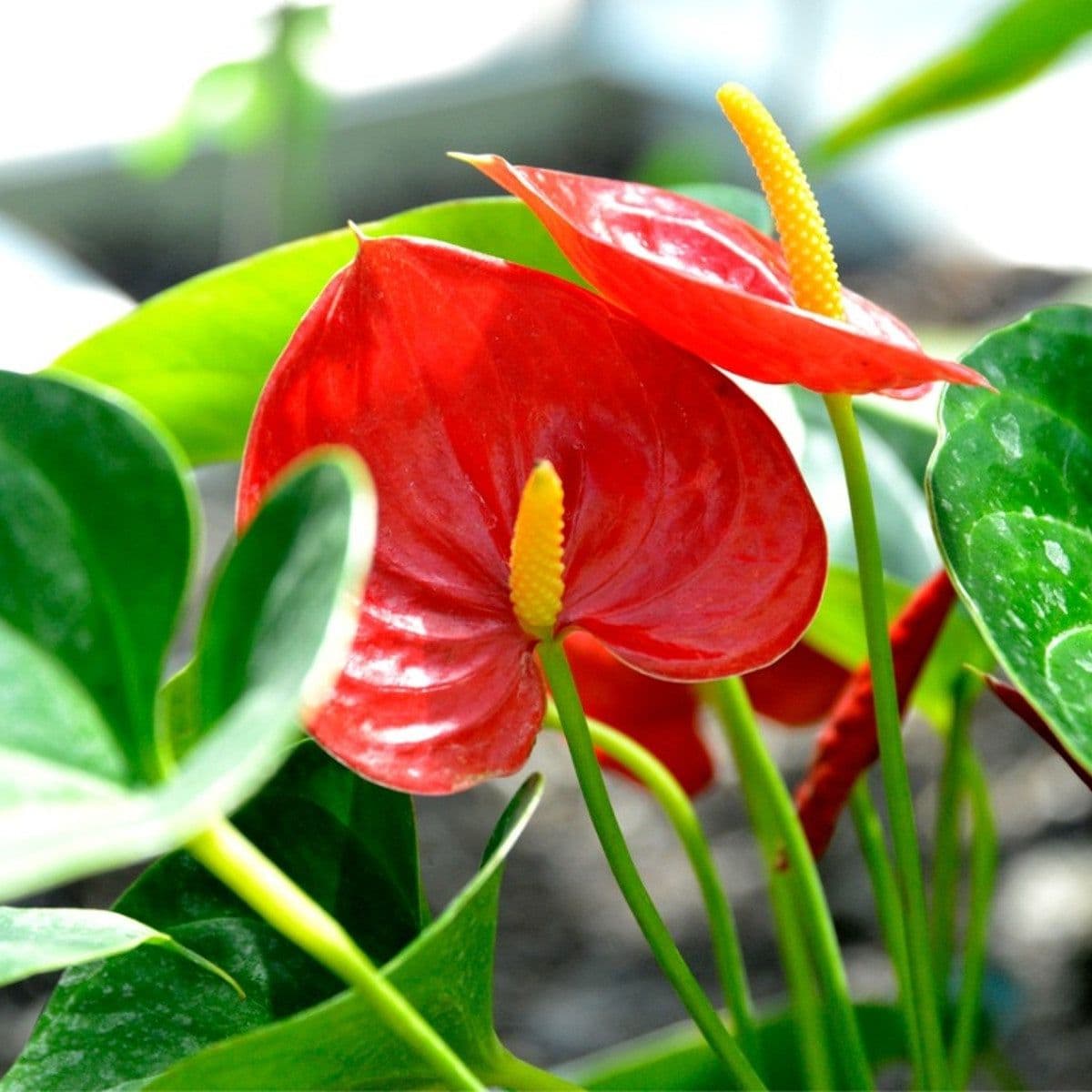
Comprehensive Anthurium Care & Propagation Guide
- Overview of Anthuriums Anthuriums, often referred to as "Flamingo Flowers" or "Painter’s Palette," are tropical plants celebrated for their vibrant, glossy spathes and exotic foliage. They belong to the Araceae family, which also includes philodendrons and alocasias, and are prized both as ornamental houseplants and as cut flowers in floral arrangements. With their bold shapes and colors, anthuriums add a dramatic tropical flair to any collection. Native to the rainforests of Central and South America - particularly Colombia, Ecuador, and Panama - anthuriums have adapted to warm, humid, and filtered light environments. In the wild, many species grow epiphytically, clinging to trees and absorbing moisture from the air, though others are terrestrial or lithophytic. The genus includes over 1,000 recognized species, ranging from the well-known Anthurium andraeanum, cultivated primarily for its flowers, to velvet-leaved foliage types like Anthurium crystallinum, warocqueanum, and papillilaminum, which are coveted by collectors. Whether grown for their flowers or foliage, anthuriums are appreciated for their year-round appeal, their relatively long blooming cycles, and their increasingly diverse hybridization potential. As interest in rare houseplants has grown, so too has the popularity of anthuriums—transforming them from simple gift-shop novelties into stars of the tropical plant world.
- Light Requirements Anthuriums thrive best in bright, indirect light, which closely mimics the dappled sunlight they receive in their natural rainforest habitat beneath a canopy of trees. Direct sunlight, especially through uncovered south-facing windows, can easily scorch their delicate leaves, causing browning, dryness, or even permanent damage. On the other hand, placing anthuriums in overly shaded areas—such as dark corners or rooms with limited natural light—can result in slow growth, elongated stems, and little to no flowering. For optimal growth, a spot near an east- or west-facing window with filtered sunlight works well. Sheer curtains, frosted glass, or diffused grow lights can also help maintain the ideal lighting balance. Leafy, dark green varieties (like A. warocqueanum or A. magnificum) can typically tolerate slightly lower light conditions, though their growth may slow. In contrast, variegated or lighter-colored varieties need higher light levels to maintain their coloration and stay compact. Without sufficient light, variegation may fade or disappear altogether. Signs of Poor Lighting Conditions: Yellowing Leaves: This can indicate either insufficient light or light that’s too harsh. If leaves appear sunburned or crispy, reduce exposure to direct sun. Leggy or Elongated Stems: A clear sign the plant is stretching toward the light, often due to a dim environment. Lack of Flowers: Anthuriums grown for their blooms, such as A. andraeanum, require adequate light to consistently produce inflorescences. If natural light is lacking, full-spectrum grow lights (set on a 10 – 12 hour cycle) can supplement effectively, especially in winter months or indoor environments with limited window access. Sansi and Barrina are our most recommended brands.
- Watering Needs Anthuriums prefer consistently moist - but never soggy - soil. A good rule of thumb is to water when the top 1–2 inches of the potting mix feels dry to the touch. These tropical plants originate from humid rainforest conditions where their roots are exposed to regular moisture and airflow, not stagnant or oversaturated soil. Overwatering is one of the most common causes of root rot and yellowing leaves, so it’s better to err slightly on the dry side than to keep the plant constantly wet. During the active growing season (typically spring through early fall), anthuriums may require more frequent watering, especially if kept in a warm environment or a loose, chunky substrate. In cooler months or when growth slows, reduce watering to match the plant’s decreased metabolic needs. Always ensure your pot has good drainage - standing water at the bottom of the container can quickly lead to problems, even if you're watering on schedule. Pro Tip: Anthuriums can be sensitive to the chemicals commonly found in tap water, especially chlorine, chloramine, and fluoride. Over time, these substances can cause browning on leaf tips and slow overall growth. To protect your plant, use filtered, distilled, or collected rainwater whenever possible. Letting tap water sit out overnight can also help some of the chlorine dissipate. If you want to learn more about water quality, check out our blog post on it!! Extra Tip for Humidity Lovers: While soil moisture is important, so is atmospheric humidity. If your anthurium’s leaves start to curl or develop dry edges, it may be a sign that the air is too dry—even if you’re watering correctly. Use a humidifier, humidity tray, or group plants together to create a more favorable environment. Here is a link to our blog on Humidity Hacking.
- Humidity & Temperature Anthuriums are native to the warm, humid rainforests of Central and South America, so they naturally thrive in environments with humidity levels between 60–80%. In the average home, humidity often falls below this range—especially during winter months when heaters are running—which can lead to crisping leaf edges, reduced growth, or stalled flowering. Increasing humidity around your plant is one of the most effective ways to keep it looking lush and healthy. Several easy methods can help boost humidity levels. Placing your anthurium on a pebble tray filled with water, grouping it near other tropical plants, or running a cool-mist humidifier nearby can make a significant difference. While occasional misting may provide a temporary boost, it doesn't create sustained humidity and can increase the risk of fungal issues on leaves if done too often or in poor airflow. Still, misting can be useful in moderation, especially on hot days or to clean dust off foliage. In terms of temperature, anthuriums prefer a steady range between 65–80°F (18–27°C). These plants are not cold-tolerant and should be kept away from drafty windows, air conditioners, or any area where temperatures may drop below 55°F (13°C). Sudden temperature swings can cause shock, leaf drop, or stunted growth. Maintaining consistent warmth and humidity mimics their natural environment and supports long-term vitality. If you're growing your anthurium outdoors in warm months, make sure to bring it inside well before temperatures begin to dip in fall. Likewise, avoid placing them near heating vents or radiators, which dry out both the air and the plant. Optimal humidity: 60–80% Ideal temperature range: 65–80°F (18–27°C) A combination temperature and humidity gauge makes it much easier and safer to track and measure both parameters.
- Soil & Potting Mix Anthuriums are epiphytic or semi-epiphytic in nature, meaning they often grow on trees or rocky surfaces in the wild rather than in dense soil. Because of this, they thrive in an airy, chunky, and well-draining potting mix that allows oxygen to reach the roots while still retaining some moisture. A dense or compacted soil will quickly lead to problems like root rot, fungus gnats, and slowed growth. The ideal anthurium substrate mimics conditions found in their natural rainforest habitat: loose, breathable, and rich in organic matter. Think of it more as a “root support system” than traditional soil. You’ll often hear growers refer to “aroid mixes,” which are blends designed for plants in the Araceae family—Anthuriums, Philodendrons, and Monsteras included. Suggested Mix for Anthuriums: Classic Aroid Mix (Soil-Based): 40% High-quality potting soil (like Espoma Organic Potting Mix) 30% Orchid bark (fine to medium chunks) 15% Perlite or pumice 10% Coco coir (hydrates and adds moisture retention) 5% Activated charcoal (for odor & toxin control) Classic Aroid Mix (Soilless): 40% Sphagnum moss (long fiber) 30% Fine-grade orchid bark 20% Perlite or pumice 10% Horticultural charcoal Optional Boosters for either mixture: Worm castings or slow-release fertilizer granules (such as Osmocote) When repotting, always choose a pot with drainage holes and size up only slightly—too large a container can trap excess moisture and overwhelm the roots.
- Fertilizing To keep your anthurium healthy and thriving, regular fertilization during the growing season is key. These plants are not heavy feeders, but they do benefit from a consistent, balanced nutrient supply to support lush foliage and, in some varieties, flower production. The active growth period typically spans from spring through early fall, when warmth and light levels encourage the plant to put out new leaves and roots. A liquid fertilizer is usually best, as it allows for easy dilution and even nutrient distribution. Apply fertilizer every 2 to 4 weeks during this time, depending on your plant’s size, light exposure, and growth rate. Always follow the product’s dilution instructions - or go slightly weaker than the recommended dose to avoid salt buildup in the soil. Check out our blogs on Fertilizing Basics and Advanced Fertilizing options. Recommended Fertilizer: ✅ Dyna-Gro Grow 7-9-5 Liquid Plant Food - A favorite among aroid collectors, this well-balanced formula encourages steady, even growth without overwhelming the plant. It includes micronutrients and is especially effective for foliage-heavy species like A. crystallinum or A. magnificum. Special Nutrient Note: Anthuriums particularly love calcium and magnesium, which help support strong cell walls, root health, and overall vigor. These nutrients are often overlooked in basic fertilizers, so consider adding a Cal-Mag supplement once a month to round out their nutritional profile. ✅ Botanicare Cal-Mag Plus - A trusted go-to among tropical plant growers, especially when using RO or distilled water, which can lack essential minerals. Winter Pause: Avoid fertilizing in the winter months when your anthurium naturally slows down. Feeding during dormancy can lead to salt buildup, root damage, or weak, leggy growth. Resume your regular fertilization schedule once spring returns and new leaves begin to emerge.
- Common Problems & Solutions Even with the best care, anthuriums can occasionally show signs of stress. Learning to spot early warning signs and knowing how to respond can make all the difference in keeping your plant healthy and thriving. Here are the most common issues anthurium growers face - and how to fix them: Brown Leaf Tips Usually caused by low humidity, dry indoor air, or salt buildup from overfertilizing. If the air is dry (especially in winter), increase humidity using a humidifier or humidity tray. If you're fertilizing regularly, flush the soil every 1–2 months with plain water to wash out excess salts. Also check your water quality - tap water high in chlorine or fluoride can contribute to this issue. Yellow Leaves Most often a sign of overwatering or inadequate light. Check if the soil is staying wet for too long—if so, reduce watering and make sure the pot has proper drainage. If the plant is sitting in a dim area, move it to a brighter spot with indirect light. Yellowing older leaves near the base are normal with age, but widespread yellowing should be addressed. No Blooms or Inflo If your anthurium isn’t flowering or producing inflo, it may not be getting enough light or nutrients. Flowering varieties like Anthurium andraeanum need bright, indirect light and consistent feeding to produce their signature spathes. Try increasing light exposure and resume or adjust your fertilizing routine - especially using a bloom-supportive fertilizer during the growing season. Pest Issues Common offenders include mealybugs, spider mites, and aphids, all of which can stunt growth or damage foliage. Inspect your plant regularly, especially the undersides of leaves and at stem joints. If pests are spotted, isolate the plant and treat using neem oil, insecticidal soap, or a rubbing alcohol/water mix. For persistent infestations, repeat treatments weekly and improve airflow around your plant to discourage future outbreaks. Proactive care - like wiping leaves clean, monitoring watering, and checking for pests - goes a long way in preventing problems before they start.
- Propagation Methods Anthuriums can be propagated through several methods, depending on the plant's maturity, your experience level, and the goal of the propagation (cloning, multiplying, or experimenting with hybrids). Each method has its own advantages and best-use scenarios. A. Division One of the simplest and most beginner-friendly methods, division involves separating a mature plant that has produced pups (also known as offsets or side shoots). These smaller growths typically emerge from the base of the mother plant and develop their own root systems over time. Once the pup has a few healthy roots and at least one or two leaves, it can be gently separated—either by pulling or cutting it away with sterile shears—and potted into its own container. This method ensures an exact genetic clone of the parent plant, making it ideal for preserving prized traits like rare variegation or leaf form. Division works best when repotting or refreshing the soil, as the root system is already exposed. B. Stem Cuttings Another popular method is propagating through stem cuttings, especially with climbing anthurium species. Look for a visible node—a small bump or ring on the stem—accompanied by an aerial root. Using a clean, sharp tool, take a cutting that includes at least one node and preferably a healthy aerial root or growing eye. You can root stem cuttings in sphagnum moss, a chunky aroid mix, or even perlite. High humidity (60–80%) and warmth will encourage faster rooting. Place the cutting in a clear container or humidity dome to maintain moisture and visibility. In a few weeks, new root growth should emerge, followed by a fresh leaf once it’s established. C. Tissue Culture (TC) Tissue culture is an advanced propagation method where tiny pieces of plant tissue are grown in sterile, nutrient-rich media inside lab conditions. Many collectors buy Anthuriums in tissue culture—often still sealed in jars or small boxes—especially rarer hybrids or wild types that are difficult to find or afford in mature form. When working with TC plants, acclimation is critical. These plants are extremely sensitive to changes in humidity, airflow, and light. Start by placing them in a high-humidity dome or enclosed container planted in a mixture of Fluval Stratum and fine perlite or a brownie plug and gradually increase ventilation over a period of days to weeks. Too much airflow too soon can dry out or kill the plant, while too little light may stall growth. Once the plant hardens off and begins pushing new growth, you can pot it into a standard mix and begin treating it like a mature seedling. Tissue culture allows for mass production and disease-free propagation, but patience and a careful hand are essential for success.
- Advanced Techniques For enthusiasts looking to deepen their connection with anthuriums, techniques like hand pollination, hybridization, and seed germination offer a rewarding way to explore the full life cycle of these fascinating plants. Whether you’re trying to create your own unique cross or simply propagate from seed, these advanced methods require patience, attention to detail, and a bit of botanical curiosity. Pollination & Crossbreeding Anthuriums produce an inflorescence made up of a spadix and spathe, and their flowers follow a unique sequential blooming pattern: the female phase comes first, followed by the male phase. To successfully pollinate, you’ll need two inflorescences at compatible stages. Use a soft brush, cotton swab, or fine tweezers to collect pollen from the mature male phase (you’ll usually see white or yellow powder on the spadix). Gently dab the pollen onto the sticky surface of the female-phase spadix on another plant—or even the same one, in the case of self-pollination. Label every cross carefully with parent names and dates. This is especially important when working with complex hybrids or trying to track traits like leaf shape, size, or variegation. After successful pollination, tiny berries will begin to swell on the spadix. Fruit development can take several months, often 4–6 months or more, before fully ripening into small, soft, berry-like structures that contain seeds. Seed Germination Once the fruit is ripe (usually soft, plump, and easily removed), carefully extract the seeds, rinse away any pulp with clean water, and sow them immediately - anthurium seeds don’t store well and lose viability quickly. Place seeds on moist sphagnum moss, seed-starting mix, or a light aroid blend (see above), spacing them out so roots and leaves have room to grow. Maintain high humidity (around 80%) and warmth (75–80°F / 24–27°C) using a propagation dome, ziplock container, or mini greenhouse setup. Good airflow is essential to prevent mold, but the environment should stay evenly humid and warm at all times. Germination typically occurs within 1–3 weeks, with small roots and cotyledons emerging first. Leaf development will follow soon after. Growing anthuriums from seed is a slow but incredibly satisfying process. It can take several years for seedlings to mature and reveal their final form—but the possibility of discovering a brand-new phenotype or hybrid is part of the thrill.
- Sourcing Supplies Using the right supplies makes all the difference in the health and success of your anthuriums. Whether you're potting up a new plant, starting seeds, or acclimating tissue cultures, investing in quality materials ensures better growth, fewer setbacks, and a smoother overall experience. Below are some trusted sources for essential supplies—used and recommended by collectors and growers in the aroid community: Orchid Bark - A key component of any chunky aroid mix, orchid bark provides structure and airflow to prevent root rot. Perlite - These lightweight additives improve drainage and prevent your mix from becoming compacted over time. Sphagnum Moss - Ideal for rooting stem cuttings, germinating seeds, or transitioning tissue culture plants. Choose long-fibered, clean moss for best results. Grow Lights and Humidifiers - Consistent lighting and ambient humidity are crucial for lush foliage and strong roots, especially in indoor setups. Tissue Cultures – For adventurous growers, tissue culture plants offer access to rare hybrids and species at a more affordable price - just be ready to acclimate them slowly.
- Conclusion Anthuriums are more than just eye-catching tropical plants - they’re living works of art that can bring bold texture, color, and elegance to any indoor space. From velvety foliage to striking inflorescences, each variety offers its own unique charm. While they may seem a bit particular at first, these plants are surprisingly adaptable once you dial in their preferred conditions. By providing the right balance of light, humidity, soil, and nutrition, and learning to respond to their signals, you’ll be well on your way to growing happy, healthy anthuriums. Whether you’re nurturing a single prized specimen or diving into advanced techniques like crossbreeding and tissue culture, there’s always more to discover with these fascinating members of the aroid family. With a bit of patience, attention, and a touch of curiosity, anthuriums will reward you with lush growth, captivating foliage, and the satisfaction of mastering one of the plant world’s most stunning genera. Happy growing - and don’t be afraid to experiment, learn, and share your journey with the ever-growing community of anthurium lovers.
BONUS #1
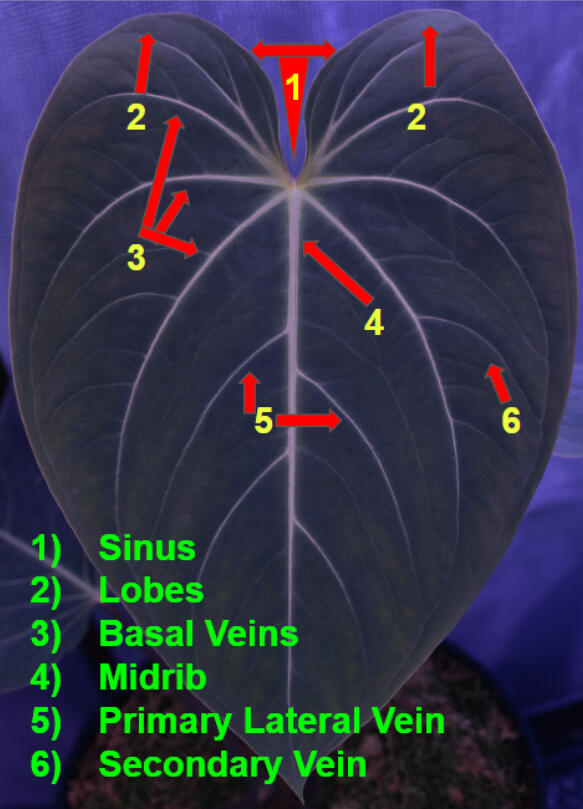
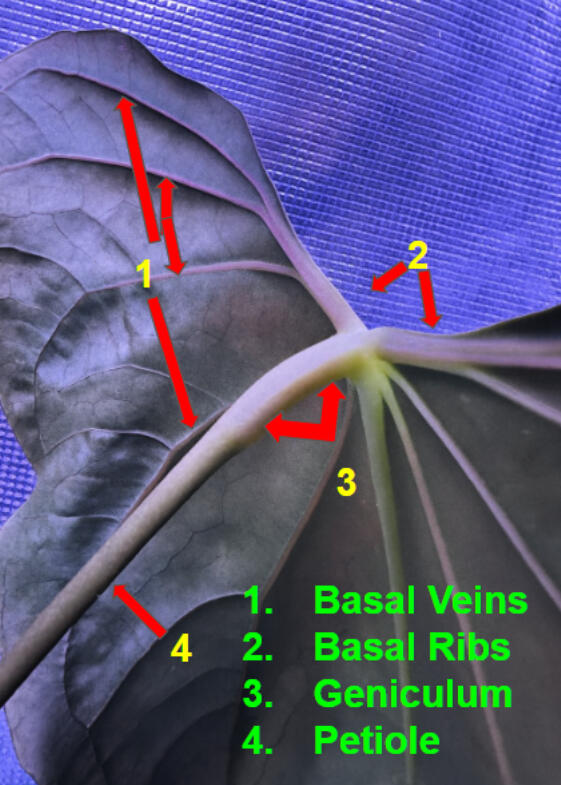
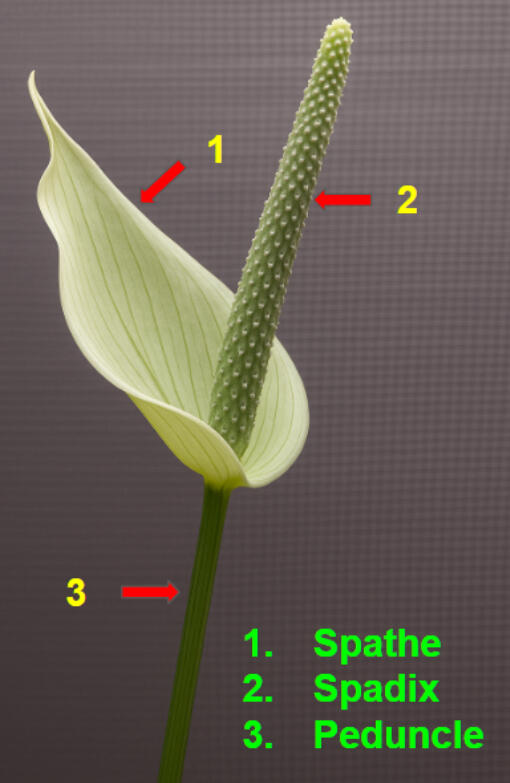
Parts of an Anthurium (Infographics)
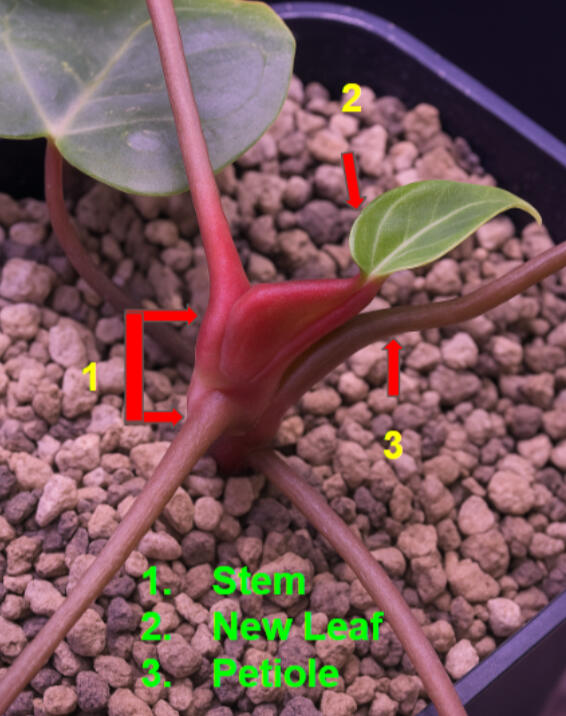
Bonus #2
Common Anthurium Terminology
Clone An individual plant produced asexually—by division, tissue culture, or cuttings—so that its genetic makeup is identical to the “mother.” Cloning ensures that any desirable traits (variegation pattern, leaf shape, growth rate) are faithfully preserved. Keep in mind that a clone is not the same as a “selfed” plant. Offset Also called a “pup,” an offset of the mother plant that forms at the base of the parent. In Anthuriums, once the offset develops its own roots, you can separate and pot it on its own to produce a new, genetically identical specimen.This is sometimes referred to as division. × self (Selfed) A cross in which pollen from a flower is used to fertilize the ovules of the same plant. Selfing in Anthuriums yields seed-grown offspring that tend to be more uniform than other sexual reproduction methods crossing other cultivars. Keep in mind that “selfed” seedlings do not always resemble the parent. Blister Variegation A rare type of variegation characterized by small, bubble-like patches of lighter tissue (often creamy white or pale yellow) on the leaf surface. In Anthuriums, these “blisters” result from somatic mutations that disrupt chlorophyll distribution in localized spots. Filial Generations (F1, F2, F3, etc.) Filial generations refer to the offspring produced through breeding, especially in controlled plant hybridization. Each generation is labeled with an “F” followed by a number, indicating its place in the lineage: F1 (First Filial Generation): The direct offspring from crossing two genetically distinct parent plants. F1 plants often show hybrid vigor - strong growth and desirable traits - but tend to be uniform. F2 (Second Filial Generation): Produced by selfing or interbreeding F1 plants. F2s show much more genetic variation, with a wide range of traits that may resemble either parent or a mix. F3, F4, F5, etc.: Each subsequent generation comes from selective breeding within the previous generation, often to stabilize specific traits like leaf shape, color, or growth habit. As filial numbers increase, plants generally become more genetically consistent but can lose hybrid vigor. In anthurium breeding, filial generations are crucial for tracking how traits are passed down and for selecting standout seedlings from a genetically diverse group. Open-Pollinated Seed produced when pollination occurs naturally (by insect, hand-rub, or wind) without controlled parentage. This can also be used when you may just be uncertain of the parents makeup or from an unknown hybrid. Offspring generally resembles the mother plant but can show wider variation since the pollen source is unknown. Bench Hybrid A deliberate, controlled cross made by a breeder—usually on a greenhouse “bench.” Pollen is hand-transferred from one selected parent to another to combine specific traits, then seeds are harvested and grown out. “Bench” is often used when the sexual crossing of the anthurium is not done in a controlled environment but is done in a greenhouse or “bench” where other pollen could possibly be involved as well. NOID Short for “no identification” or “NO ID”. A plant (or seedling) lacking a registered name or known lineage. Among Anthurium hobbyists, NOIDs may be unnamed seedlings or sports awaiting classification, lost tags or a multitude of other reasons. Ecotype A naturally occurring population of a species adapted to a particular locale or microclimate. Different Anthurium ecotypes (e.g., from Costa Rica vs. Ecuador) may show distinct leaf shapes, sizes, or tolerances can also be referred to as a “subspecies”. Germination The process by which a seed resumes growth and sprouts into a seedling. For Anthuriums, optimal germination often requires warm temperatures (75–85 °F), high humidity, and a fine, well-draining seed medium. Community Pot A single container in which many seedlings (often from the same cross) are grown together. In Anthuriums, community pots encourage upright growth and can be pricked out later—plus they look lush and full while you’re evaluating seedlings. ~Note: Do your sanity a favor and separate the seedlings before the roots become too intertwined. Cataphyll Growth (“in cataphyll”) Cataphylls are the papery sheath-leaves that enclose and protect a developing leaf or inflorescence. When you see new growth “in cataphyll,” it means the emerging leaf or spike is still partly wrapped in its protective covering. Inflorescence (“inflo”) The reproductive structure of an anthurium., composed of a usually colorful spathe (a modified leaf) surrounding a spadix (the central stalk bearing tiny true flowers). Growers often abbreviate it as “inflo.” Spadix The spadix is the central, finger-like spike found at the center of the spathe. It’s actually a dense cluster of tiny true flowers, arranged along the spike. Anthurium flowers bloom in phases - female first, then male - which is why understanding the spadix is key for successful hand pollination and hybridization. Aerial Root An aerial root is a root that grows above the soil line, typically along the stem or at nodes. In the wild, these roots help anthuriums anchor themselves to trees and absorb moisture and nutrients from the humid air. Indoors, aerial roots often signal a healthy, actively growing plant and can assist in propagation when included in cuttings. Variegation Variegation refers to irregular patches or patterns of color on a leaf - often white, cream, yellow, or pink - caused by the absence or reduction of chlorophyll in certain areas. While beautiful and often highly sought-after, variegated anthuriums generally require brighter light to maintain their coloring, as they have less surface area for photosynthesis. Node A node is a small, slightly raised or ringed area on the stem where leaves, roots, or new growth can emerge. Nodes are essential in propagation—any successful cutting must include at least one node, as it’s the growth point that generates new roots and shoots. Without a node, a cutting cannot develop into a new plant.
Bonus #3
Common Anthurium Naming Nomenclature & Definitions
DF Dewey Fisk (collector/source) and also used to mean “Dark Form” or “Delta Force” sp. nov “DF” Literally “species nova Dewey Fisk” – a temporary placeholder for an undescribed new species collected by Dewey Fisk. papillilaminum FS or just FS “Fort Sherman” – a classic wild‐collected A. papillilaminum clone from Jay Vannini’s Fort Sherman site. papillilaminum RL or just RL “Ralph Lynam” pap clone; a wild A. papillilaminum clone introduced by Jay Vannini. RL Ralph Lynam pap clone (from Jay Vannini) RLFS, FSRL, RL × FS, FS × RL Any combination of RL and FS denotes the cross between the Ralph Lynam and Fort Sherman clones (RL × FS = RL seed parent × FS pollen parent; FS × RL vice versa). RC “Red Crystallinum” or just “Red Crystal” – a red‐veined form of A. crystallinum. AOS “Ace of Spades” – a dark, spade-shaped hybrid of uncertain parentage. DP “Dark Phoenix” – an A. papillilaminum × A. dressleri hybrid originally from Indonesia. CP “Circus Peanuts” – a dressleri × leucostachyum hybrid nicknamed for its candy-sweet inflorescence odor. FTG (FTG crystallinum) A crystallinum hybrid originating from Fairchild Tropical Gardens. NSE Plants grown by NSE Tropicals (Enid Offolter’s Florida nursery). SKG Plants grown by Silver Krome Gardens in Florida. Tezula Plants grown by Tezula Plants in Florida. KOS or HU “King of Spades” or “Haji Uli” – an Indonesian hybrid by breeder Haji Uli, sometimes notated just as (HU) as well. TALL “Tim Anderson Long Leaf” – a long-leaf hybrid introduced by Tim Anderson, often in TALL “A” and TALL “B” forms. papillilaminum L × LB or just LB “Long × Long Bullet” – a form of papillilaminum with especially elongated leaves. Novelty Ace or Novelty AOS A plant sold by @noveltyg on eBay as “Ace of Spades” - not a true AOS but similar in appearance. RA1, RA2, RA3… Numbered wild papillilaminum clones sold by Rory Antolak (“RA”). RA Any plant sourced or sold by Rory Antolak (source of many wild-collected clones) Dressleri RG “Río Guanche” – an ecotype of A. dressleri from Río Guanche, Panama, prized for its near-black leaves. Indo dressleri A NOID (no-ID) anthurium from Indonesia sold under the name dressleri - NOT true A. dressleri. “Windy” dressleri A form of A. dressleri grown by Windy Aubrey, likely derived from the RG clone but sold under her name. OG1, OG2, OG3… Wild A. carlablackiae clones numbered by Scott Cohen (originally sourced from Rory Antolak). SC1, SC2, SC3… Numbered papillilaminum clones sold by Scott Cohen (“SC”). Wu1, Wu2, Wu3… Select lines of various species (e.g. crystallinum, papillilaminum, carlablackiae) produced by Wuhoo Tropicals in Texas. GPH Juan (aka @GayPlantHeaux) personal cataloguing notation for his clone codes for his A. carlablackiae mother plants - most famously GPH001 KOC “King of Clarinervium,” an unnamed Indonesian A. clarinervium hybrid or sport JV Jay Vannini - CA grower/breeder renowned for line-breeding A. dressleri (Rio Guanche ecotype) PM Paul Marcellini from Understory Oasis (South Florida); especially known for his A. kunayalense lines RF Round × Felix F₁ cross - a family of hold-backs/breeding lines (e.g. RF1, RF2) RVDP “Red Vein Dark Phoenix,” a Thailand hybrid similar ro the Dark Phoenix but with red venation BVEP Black Velvet Eastern Panama (now A. antolakii) RG Río Guanche ecotype of A. dressleri (aka Ree Gardens)
Some links in this guide are affiliate links. If you buy through them we may earn a small commission — it costs you nothing and helps keep these guides free.