Care LibraryAroids
Bonuses: FAQ, Top 50, Top 10 and Flowers
July 30, 2026 · 12 min read
Part 6 of 6
The Ultimate Alocasia GuideTop 20 Alocasia Care FAQ - Questions & Answers
🌿 Q1: Why is my Alocasia drooping? A: Drooping can be caused by: Underwatering (most common). Overwatering (roots aren’t absorbing water). Low light. Low humidity. Temperature stress. Post-repotting shock. Check the soil first. If it’s dry - water deeply. If it’s wet - improve drainage and airflow. Q2: Why are my Alocasia’s leaves turning yellow? A: Common reasons include: Natural aging (lower leaves dying off). Overwatering. Poor drainage or root rot. Lack of light. Cold temperatures. High fertilizer salts. If the yellowing is only on old leaves, it’s normal. If it’s on new leaves - check roots and light. Q3: Why are the leaf edges turning brown or crispy? A: Usually from: Low humidity. Underwatering. Direct sun exposure. Too much fertilizer. Heat stress. Increase humidity (60%+), adjust watering, and avoid harsh sun. Q4: Why is my Alocasia’s new leaf so small? A: Small leaves are almost always caused by: Low light. Insufficient nutrients. Low humidity. Cold temperatures. Interrupted watering cycles. Seasonal slowdown. Improving light is the biggest fix. Q5: How often should I water my Alocasia? A: Water when the top 1–2 inches of soil are dry. There is no fixed schedule — it depends on: Light. Temperature. Humidity. Soil type. Season. In summer: every 5 - 7 days. In winter: every 10 - 21 days. Q6: My Alocasia lost all its leaves - is it dead? A: Not necessarily! Alocasia naturally enter dormancy under: Low light. Cold temperatures. Seasonal changes. Stress. If the corm is firm, the plant is alive. Provide warmth, bright indirect light, and minimal watering until growth resumes. Q7: How do I know if my Alocasia is dormant? A: Signs of dormancy: No new leaves. Soil stays wet longer. Leaf drop (sometimes all leaves). Slowed water intake. Cold weather or short daylight. Dormancy is normal and reversible. Q8: Why does my Alocasia keep getting spider mites? A: Spider mites thrive when: Air is dry. Plant is stressed. Leaves are dusty. Light is low. Prevent by: Keeping humidity above 55–60%. Wiping leaves. Providing consistent light. Adding gentle airflow. Treat by rinsing + neem or insecticidal soap every 3–5 days. Q9: Is my Alocasia getting too much sun or too little? A: Too much sun: crisping edges, pale leaves, brown patches. Too little light: long petioles, leaning stems, small leaves, fading color. Bright, indirect light is ideal. Q10: How often should I fertilize my Alocasia? A: During active growth (spring - early fall): Every 2 - 3 weeks with diluted liquid fertilizer or use a slow-release fertilizer every 3 - 4 months. Do NOT fertilize during dormancy. Q11: What kind of soil mix is best for Alocasia? A: A chunky, well-draining aroid mix: Chunky Perlite Orchid bark Coconut coir or sphagnum moss Worm castings Horticulture Charcoal Alocasia roots need oxygen + consistent moisture. Q12: When should I repot my Alocasia? A: Repot only when: Roots are circling the pot. Soil breaks down. Plant dries out within 1–2 days. Pups crowd the pot. Best time: spring or early summer Never repot in winter unless absolutely necessary. Q13: Why is my Alocasia curling its leaves? A: Possible causes: Underwatering. Low humidity. Too much direct light. Heat stress. Thrips infestation. Check moisture + humidity first, then inspect for pests. Q14: How do I encourage bigger leaves? A: Bright, stable light Humidity 60–70% Warm temps (70–85°F) Consistent watering Regular fertilizing Don’t separate pups too early Bigger leaves = more stored energy in the corm. Q15: Why does my Alocasia keep producing one leaf at a time? A: That’s normal! Alocasia typically grow one leaf at a time, replacing older leaves as new ones form. A healthy mature plant maintains 3 - 6 leaves on average. Q16: Why does my new leaf get stuck or tear when unfurling? A: Common causes: Low humidity. Rapid drying. Underwatering. Nutrient deficiency. Thrips. Raise humidity and water consistently to fix. Q17: Are Alocasia toxic to pets? A: Yes. Alocasia contain calcium oxalate crystals that can cause mouth irritation and digestive upset if eaten. Keep away from pets and children. Q18: How do I propagate Alocasia? A:Three reliable methods: Separate pups Grow from corms Divide the root ball (for large species) Stem cuttings do not work. Q19: Why does my Alocasia lean to one side? A: Growing toward the light. Uneven light exposure. Weak petioles from low light. Rotate your plant weekly for balanced growth. Q20: What’s the #1 beginner mistake with Alocasia? A: Overwatering in dense soil. Alocasia roots need moisture, but also oxygen - soggy soil suffocates roots and causes rot quickly. Use a chunky aroid mix and water when the top 1–2 inches dry.
BONUS #2
🌿
Top 50 Most Popular Alocasia (With Brief Descriptions)
🌿
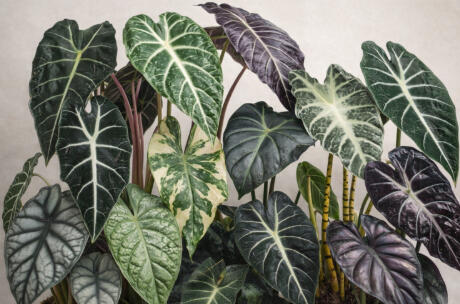
- Alocasia Amazonica ‘Polly’ / ‘African Mask’ Dark arrow-shaped leaves with bold white veins; compact and very popular indoors.
- Alocasia Amazonica ‘Bambino’ A smaller version of Polly with narrower, elongated leaves.
- Alocasia Micholitziana ‘Frydek’ Velvety deep-green leaves with sharp white veins; beloved for its dramatic texture.
- Alocasia Micholitziana ‘Frydek Variegated’ Rare variegated version with creamy marbling; more sensitive and slow-growing.
- Alocasia Dragon Scale Thick, quilted, almost reptilian leaves resembling dragon hide; highly sought after.
- Alocasia Silver Dragon Silvery-gray leaves with dark veins; compact and jewel-like.
- Alocasia Green Dragon Similar to Dragon Scale but a bit softer in color and more vigorous.
- Alocasia Baginda ‘Pink Dragon’ Shiny dark leaves with pink petioles; fast-growing and elegant.
- Alocasia Melo (Alocasia rugosa) Thick, stone-like leaves with coarse texture; a true jewel Alocasia.
- Alocasia Cuprea ‘Red Secret’ Metallic copper-red leaves that shine like foil; small but dramatic.
- Alocasia Regal Shield Large, upright leaves with maroon undersides; ideal statement plant.
- Alocasia Portora A hybrid with large ruffled leaves; very hardy and fast-growing.
- Alocasia Odora Tall, fragrant variety with large shield-shaped leaves.
- Alocasia Macrorrhiza ‘Giant Taro’ Huge leaves (up to 5 feet); commonly grown outdoors in tropical climates.
- Alocasia Macrorrhiza ‘Stingray’ Unique tail-like leaf tips that resemble a swimming stingray.
- Alocasia Macrorrhiza ‘Black Stem’ Same giant leaves as macrorrhiza but with deep purple-black stems.
- Alocasia Sarian Tall, narrow leaves with a speckled green-and-white petiole pattern.
- Alocasia Calidora Elephant ear-style leaves; sturdy and great for outdoor tropical gardens.
- Alocasia Lowii ‘Wavy’ Rippling, narrow leaves with pronounced waves along the edges.
- Alocasia Zebrina Famous for its zebra-striped stems and large arrow-shaped leaves.
- Alocasia Melo Variegata Rare variegated form of Melo with creamy marbling.
- Alocasia Platinum Bright silvery leaves with soft metallic sheen; compact growth.
- Alocasia Black Velvet Dark velvety leaves with sharp silver veins; compact and elegant.
- Alocasia Black Velvet Variegata Highly collectible variegated form with white streaking.
- Alocasia Azlanii Metallic purple leaves that darken with age.
- Alocasia Hilo Beauty Variegated camouflage-like pattern of light and dark green.
- Alocasia Reversa Unique reversal of vein patterns - dark veins on lighter green leaves.
- Alocasia Wentii Green leaves with deep purple undersides; hardy and beginner-friendly.
- Alocasia Longiloba Long, arrowhead-shaped leaves with crisp white venation.
- Alocasia Sinuata Glossy, blistered leaves; compact and jewel-like.
- Alocasia Tiny Dancer Small, whimsical leaves on slender petioles; playful, cute growth habit.
- Alocasia Jacklyn Deeply lobed leaves with black venation; extremely collectible.
- Alocasia Lauterbachiana (‘Purple Sword’) Long, thin leaves with purple undersides; sword-like and architectural.
- Alocasia Yucatan Princess Large glossy leaves with maroon stems; vigorous grower.
- Alocasia Infernalis ‘Black Magic’ Nearly black metallic leaves; eerie and gorgeous.
- Alocasia Maharani (‘Grey Dragon’) A cross between Dragon Scale and Melo; thick silver-gray textured leaves.
- Alocasia Brancifolia Tall, jagged, deeply segmented leaves resembling a gothic fern.
- Alocasia Harlequin Extremely rare; mottled variegation and bright pink stems.
- Alocasia Watsoniana Large, velvety leaves with stark white veins; looks like a giant Frydek.
- Alocasia Scalprum Small, elongated leaves like dagger blades; compact and unique.
- Alocasia ‘Red Velvet’ Red-tinted petioles with velvety green leaves; dramatic contrast.
- Alocasia Ivory Coast Pink petioles and clean triangular leaves; easier than Pink Dragon.
- Alocasia ‘Silver Nebula’ Variegated shades of silver and green in a misty, marbled pattern.
- Alocasia Lutea (‘Golden Stem’) Bright yellow-gold stems with glossy green leaves.
- Alocasia ‘Low Rider’ A dwarf version of macrorrhiza varieties that stays compact.
- Alocasia ‘Serendipity’ Glossy dark leaves, sometimes appearing nearly black.
- Alocasia Jack’s Giant Huge, hardy outdoor elephant ear variety; can reach 8 feet tall.
- Alocasia Dragon Tooth Long arrow-shaped leaves with pointed tips and thick texture.
- Alocasia ‘Dark Star’ Hybrid with enormous, semi-velvety purple-green leaves. 50.Alocasia Cucullata (‘Hooded Dwarf’) Small, heart-shaped leaves; said to bring good luck in some cultures.
BONUS #3
🌿
Top 10 Easiest Alocasia for Beginners (With Brief Descriptions)
🌿 These selections are based on: ✔️ resilience ✔️ lower humidity requirements ✔️ stronger root systems ✔️ fast recovery from stress ✔️ tolerance for moderate light ✔️ fewer pest issues ✔️ predictable growth habits Let’s dive in!
- Alocasia Amazonica ‘Polly’ / ‘African Mask’ Probably the most common starter Alocasia — and for good reason. It grows fast, handles medium to bright light, adapts well to homes, and clearly communicates its needs. Easy to find and easy to read.
- Alocasia Wentii An extremely hardy, forgiving species. Wentii tolerates lower humidity, cooler temps, and imperfect watering better than most Alocasia. Its purple leaf backs add beauty without the fuss.
- Alocasia Pink Dragon A crowd favorite. Pink stems, glossy leaves, and quick growth make this one very beginner-friendly. It’s resilient, tolerant of indoor conditions, and rarely goes fully dormant.
- Alocasia Yucatan Princess A fast grower with big glossy leaves and rich maroon stems. It’s less prone to spider mites than velvety species and grows well in standard household humidity.
- Alocasia Odora (‘Night-Scented Lily’) A tall, sturdy variety that thrives in bright indirect light. Odora tolerates minor neglect and bounces back easily. Perfect for someone wanting a more dramatic, large-leaf look without the difficulty.
- Alocasia Macrorrhiza (‘Giant Taro’) Surprisingly beginner-friendly when grown indoors or outdoors in warm climates.It’s hardy, grows quickly, and forgives watering mistakes. Leaves get huge - but care is simple.
- Alocasia Regal Shield A gorgeous, architectural hybrid. Dark green leaves, bronze undersides, and strong petioles. It handles indoor conditions very well and is resilient to environmental changes.
- Alocasia Lauterbachiana (‘Purple Sword’) Narrow, upright leaves and purple backs. This variety tolerates lower humidity, doesn’t require intense light, and is far less sensitive than velvety Alocasia. Excellent for desks or shelves.
- Alocasia Cucullata (‘Buddha’s Palm’) One of the hardiest Alocasia on earth. Small, heart-shaped leaves and a compact footprint. Cucullata is tolerant of lower light, irregular watering, and household humidity - ideal for beginners.
- Alocasia ‘Tiny Dancer’ Adorable, whimsical, and shockingly easy. It has small, cupped leaves held on slender stems and thrives even in moderate humidity. It's also less prone to pests and doesn’t mind being slightly root-bound.
BONUS #4
🌸
Propagating Alocasia via Pollination?
🌸 Can it be done? Yes - but only through successful flowering and seed production. Alocasia do not self-propagate by leaves or stems. Sexual reproduction happens only when: The plant flowers. The flower is pollinated at the correct time. Seeds develop. Seeds are harvested and grown. This is true genetic propagation, not cloning like pups or corms. 🌿
Understanding Alocasia Flowers (Inflorescences)
🌿 Alocasia produce an aroid inflorescence, not a traditional flower. It consists of: Spathe – the outer sheath (looks like a petal) Spadix – the inner spike that holds the flowers
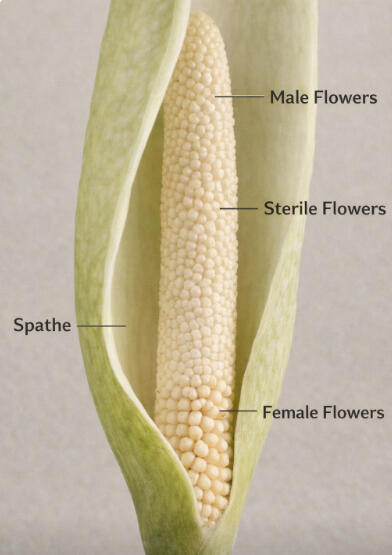
The spadix contains: Female flowers (lower section) Male flowers (upper section)
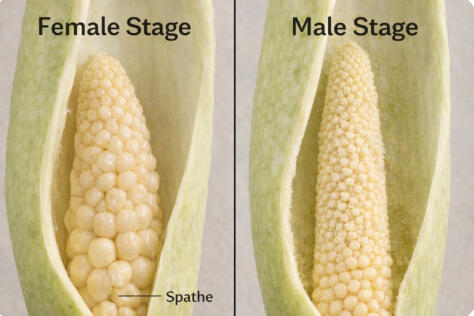
⚠️Important⚠️ These two parts are not receptive at the same time, which prevents self-pollination in most cases. ⏳The Critical Timing Problem (Protogyny)⏳ Alocasia are protogynous, meaning: Female flowers are receptive first. Male flowers release pollen later. This means: You usually need two flowers or two plants. Or you must collect pollen and wait for the female phase of another bloom. This timing challenge is why pollination is uncommon in home settings. 🐝**How Pollination Works (Manually)**🐝 Step-by-step overview:
- Wait for the female phase.
- The spathe opens slightly.
- The lower spadix becomes sticky or moist.
- This phase lasts only 1–2 days.
- Apply pollen.
- Use a soft brush or cotton swab.
- Apply pollen from another Alocasia flower (or precollected pollen). Cross-species pollination is possible within the genus.
- Wait for male phase Pollen is released in this phase. You can collect it for future use (freeze it briefly if needed)
- Seed development
- If successful, the spathe will close The spadix thickens and berries form over several months 🍒What Alocasia Seeds Look Like🍒
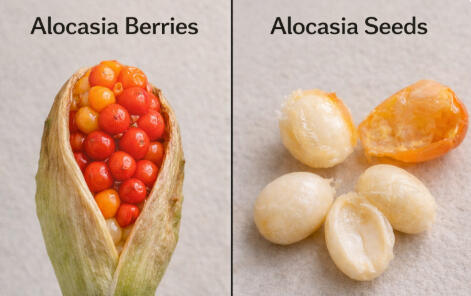
Seeds develop inside small berries. Berries turn red, orange, or yellow when ripe. Each berry contains 1–3 seeds. Seeds are not dormant and must be planted fresh. 🌱Growing Alocasia From Seed🌱 Seeds are: Short-lived. Sensitive to drying. Slow-growing. To germinate: Plant immediately after harvest. Use sterile, airy medium (moss or fine aroid mix). Keep warm (75–85°F). Maintain high humidity. Expect weeks to months before visible growth. Seed-grown Alocasia: Grow much slower than corm-grown plants. Can take years to reach maturity. May look very different from the parent. 🧬Why People Pollinate Alocasia🧬 Pollination is mainly done to: Create new hybrids. Introduce new traits. Produce variegation possibilities. Preserve rare genetics. Experiment with breeding. This is how many rare and named hybrids exist today. ⚠️Why Pollination Is NOT Common for Most Growers⚠️ For everyday plant owners, pollination is impractical because: Alocasia rarely flower indoors. Flowering requires mature, healthy plants. Timing is difficult. Seed success is inconsistent. Results are unpredictable. Growth is very slow. For most people:
Corms and pups are faster, easier, and identical to the parent
🌱Bottom Line🌱 Yes, Alocasia can be propagated by pollination — but it’s an advanced breeding method, not a practical propagation technique for most growers. If your goal is: More plants - use pups or corms Identical plants - avoid seeds Hybridization - pollination is the way Experimentation - seeds are exciting